Buying a luxury caravan is a serious investment, and protecting that investment properly matters just as much as choosing the right layout or finish. Yet insurance is often the last thing buyers think about, usually squeezed in right before pickup day. That’s a mistake. Luxury caravans come with higher price tags, custom cabinetry, solar systems, and premium appliances, all of which need to be accounted for in a policy that’s built for the vehicle you actually own, not a generic van.
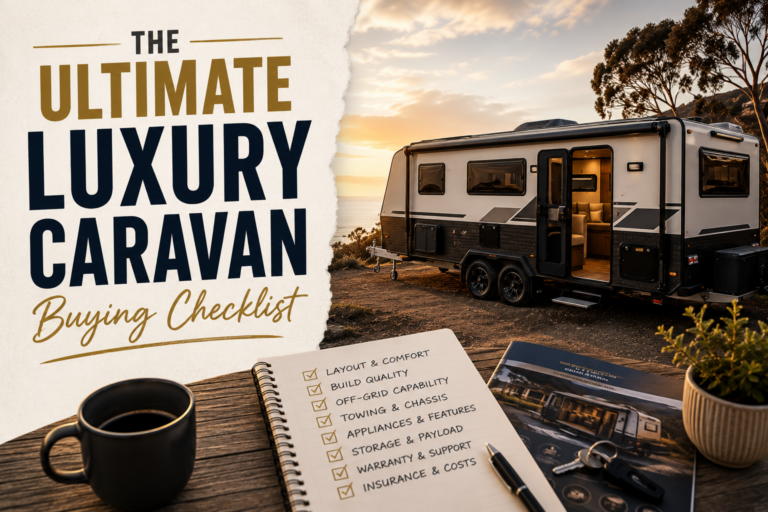
This guide walks through exactly what to look for in a luxury caravan insurance policy, the questions to ask before you sign, and the common gaps that catch new owners off guard. If you’re still comparing models, our luxury caravan buying checklist is a useful companion to this article, since insurance costs can shift depending on the caravan’s value, age, and features.
Why Luxury Caravans Need Specialised Cover
Standard caravan insurance is built around average vans with average contents. A luxury caravan is a different proposition. Higher build quality, imported fixtures, larger solar and battery setups, and premium furnishings all push replacement costs well above what a standard policy assumes.
Insurers price luxury caravans differently because:
- Repair costs are higher due to specialised parts and cabinetry.
- Replacement timelines can be longer if parts are imported.
- Contents often include expensive appliances, entertainment systems, and off-grid equipment.
- Depreciation curves differ from mainstream caravan brands.
If you’re comparing dealers or models, it’s worth checking with your dealer network, including options like those listed across our dealer directory, on what documentation they provide for insurance purposes, such as build specs and itemised inclusions.
Agreed Value vs Market Value: Get This Right First
This is the single biggest decision buyers get wrong.
Agreed value means you and the insurer settle on a fixed payout amount at the start of the policy, based on the caravan’s true value including upgrades and accessories. If the caravan is written off, that’s what you receive, regardless of what the market says at claim time.
Market value means the payout is based on what the insurer believes the caravan is worth at the time of the claim, which can be significantly lower than what you paid, especially in the first few years of ownership.
For a luxury caravan, agreed value is almost always the safer choice. It removes the guesswork and protects you against depreciation disputes right when you need the payout most.
On-Road vs Comprehensive Touring Cover
Not all caravan policies cover the same situations. Before signing, confirm exactly what’s included:
- Towing cover: Does the policy cover damage caused while the caravan is being towed, including jackknife incidents?
- Storage cover: Is the caravan covered while parked at home, in a storage facility, or at a caravan park?
- Off-grid and remote travel: If you’re planning long trips through regional or remote Australia, check whether cover extends to those areas without extra loading.
- Accessories and awnings: Annexes, bike racks, solar panels, and satellite equipment are sometimes excluded unless specifically listed.
Buyers heading off-grid should also read our guide on solar power for luxury caravans, since solar and battery systems are increasingly common inclusions insurers need to know about upfront.
What “Contents” Actually Covers
Contents cover in a caravan policy is not the same as home contents insurance, and this is where many new owners get caught out. Ask your insurer to clarify whether the following are included as standard or need to be added:
- Fixed appliances (fridges, cooktops, air conditioning units).
- Entertainment systems and smart TVs.
- Solar panels, inverters, and lithium battery banks.
- Awnings, annexes, and outdoor furniture.
- Personal items carried while travelling.
If you’re weighing up air conditioning options for your van, our article on caravan air conditioning explains what’s typically fitted in luxury models, which is useful context when confirming contents value with your insurer.
Excess, Claims History, and No-Claim Bonuses
Excess amounts on luxury caravans can vary significantly between insurers, and a lower premium sometimes hides a much higher excess. Before signing, check:
- The standard excess and whether it changes for at-fault claims.
- Whether a no-claim bonus carries over from a previous caravan or vehicle policy.
- Whether roadside assistance and emergency accommodation are included or optional extras.
- How claims history affects renewal premiums for high-value vans.
Questions to Ask Your Insurer Before You Sign
- Is the payout based on agreed value or market value?
- Does the policy cover towing accidents and off-road touring?
- Are solar, battery, and entertainment systems included in contents cover?
- What is the excess, and does it change based on fault?
- Is storage away from home covered, including caravan parks and storage facilities?
- Are there restrictions on how many days per year the caravan can be used?
Luxury caravan insurance isn’t something to finalise in a rush. The right policy protects the full value of your investment, from the chassis to the solar setup to the cabinetry inside. Before you sign anything, confirm agreed value cover, check exactly what’s included in contents, and ask direct questions about towing, storage, and off-grid use. A few extra minutes comparing policies now can save significant stress if something goes wrong down the track.
If you’re still in the research phase, read our ultimate buying checklist for a full rundown of what to consider before purchase.
Frequently Asked Questions
Is agreed value insurance more expensive than market value insurance?
Agreed value cover is usually slightly more expensive upfront, but it removes the risk of being underpaid at claim time, which makes it better value for higher-priced luxury caravans.
Does caravan insurance cover damage caused while towing?
Not always. Some standard policies exclude towing incidents unless you specifically confirm comprehensive touring cover, so it’s important to check this before you sign.
Do I need separate insurance for solar panels and batteries?
Many insurers require these to be listed separately as part of your contents declaration, particularly for larger off-grid systems, so always disclose them upfront.
Can I insure a luxury caravan for occasional use only?
Yes, some insurers offer usage-based policies for caravans that aren’t used year-round, which can reduce premiums, but it’s worth confirming any restrictions on total days used.
What happens if my caravan is written off in the first year?
With agreed value cover, you receive the agreed payout amount regardless of market depreciation. With market value cover, the payout may be lower than what you originally paid.
 Off-Road Caravans
 Touring Caravans
 Family Caravans
 Lightweight Caravans
 Camper Trailers
 Luxury Motorhomes
 Caravan Pods
 Electric Caravans
 Slide-Out Caravans