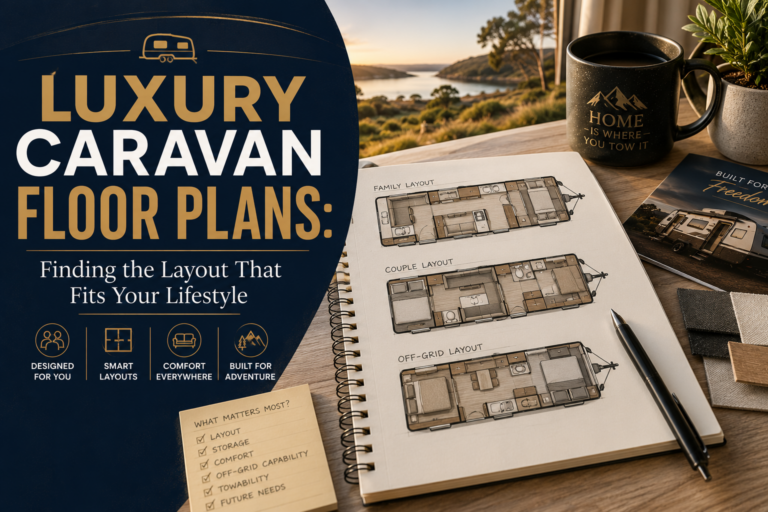
Not every luxury caravan owner buys a van and leaves it exactly as it came off the showroom floor. Whether it’s upgrading power systems, reworking storage, or a full custom interior rebuild, renovations and custom builds are increasingly common among owners who want a caravan tailored precisely to their travel style.
This guide walks through what’s genuinely achievable, from smaller upgrades through to larger structural changes, and where the line sits between a smart investment and a costly mistake. If you’re considering an upgrade rather than a renovation, our guide on trading in your caravan for a luxury upgrade is worth reading as an alternative path.
Cosmetic Upgrades: Low Risk, High Impact
The simplest category of renovation focuses on appearance and comfort without touching structural or mechanical systems.
- Reupholstering seating and cushions to refresh tired interiors.
- Updating cabinetry finishes, handles, and benchtops.
- Replacing flooring with more durable or better-looking materials.
- Upgrading lighting to LED strips or smart lighting systems.
These changes are generally low risk, don’t affect warranty on structural components, and can meaningfully improve day-to-day comfort.
Functional Upgrades: Power, Storage, and Off-Grid Capability
This is where most serious caravan owners focus their renovation budget, since it directly affects how and where the caravan can be used.
- Upgrading solar panels, batteries, and inverters for better off-grid performance, covered in more detail in our guide on solar power for luxury caravans.
- Adding or upgrading lithium battery systems, which we explain further in our article on lithium batteries in luxury caravans.
- Reworking internal storage solutions to suit long-term travel rather than occasional trips.
- Installing or upgrading air conditioning units, discussed in our guide on caravan air conditioning.
These upgrades typically offer the best return in terms of usability, particularly for owners shifting toward more off-grid or long-term travel.
Structural and Layout Changes: Proceed With Caution
Full custom builds or significant structural changes are possible, but they come with real risk if not handled by experienced professionals.
- Reconfiguring internal walls or layouts can affect the caravan’s structural integrity if not engineered correctly.
- Adding weight through custom cabinetry, tanks, or fittings can push the caravan over its GVM or affect towing balance.
- Structural changes may void manufacturer warranty on affected components.
- Registration and compliance requirements vary by state, and significant modifications may need to be certified.
Any structural work should be carried out by a qualified caravan builder or engineer, not attempted as a DIY project, particularly where weight distribution or chassis modifications are involved.
Weight: The Hidden Constraint on Every Custom Build
Every addition to a caravan, no matter how small, adds weight, and weight is one of the most overlooked constraints in custom builds.
- Confirm the caravan’s GVM (Gross Vehicle Mass) and how much payload capacity remains after standard fit-out.
- Account for water, gas, and personal items on top of any renovation additions.
- Consider how added weight affects towing stability and legal compliance with your tow vehicle.
Renovation vs Resale Value
Not all renovations add value at resale, and it’s worth thinking ahead before investing heavily in highly personalised changes.
- Practical upgrades like solar, batteries, and storage tend to add resale appeal.
- Highly personalised cosmetic choices may actually narrow the pool of interested buyers later.
- Our guide on luxury caravan costs and resale value covers this in more depth for owners planning to sell or trade in eventually.
When to Renovate vs When to Trade In
Sometimes a full renovation isn’t the most cost-effective path forward, particularly if the caravan’s base layout or chassis condition doesn’t suit your long-term needs.
- If the core layout doesn’t work for your travel style, trading in for a different floor plan may be more effective than trying to renovate around it.
- If the caravan is fundamentally sound and simply needs updated systems, targeted upgrades usually make more sense.
- Our step by step guide on trading in your caravan for a luxury upgrade walks through that process if a new caravan is the better option.
Conclusion
Renovations and custom builds can genuinely transform how a caravan performs and feels to live in, particularly when focused on power, storage, and comfort upgrades. Structural changes are possible too, but they demand professional input, careful weight management, and an honest look at warranty and resale implications. Before committing to a major project, weigh up whether renovating the caravan you have, or trading in for one better suited to your needs, is the smarter long-term move.
Browse current stock in our dealer directory if a fresh start makes more sense than a renovation project.
Will renovating my caravan void the warranty?
It depends on what’s changed. Cosmetic upgrades generally don’t affect warranty, but structural changes or modifications to power and chassis systems may void warranty on those specific components.
What’s the most valuable upgrade for off-grid travel?
Upgrading to a lithium battery system paired with an appropriately sized solar array and inverter tends to offer the biggest improvement in off-grid capability and comfort.
Can I add extra water tanks or storage without professional help?
Adding significant weight or altering tank capacity should always involve a qualified caravan technician, since it affects GVM compliance and towing stability.
Do custom interior renovations hurt resale value?
Highly personalised finishes can narrow buyer interest at resale, while practical upgrades like power systems and storage solutions tend to be viewed positively by future buyers.
Is it cheaper to renovate or trade in for a new caravan?
It depends on the scope of work needed. Smaller functional upgrades are usually cheaper than trading in, but major structural changes can sometimes cost close to the value of upgrading to a newer model.
 Off-Road Caravans
 Touring Caravans
 Family Caravans
 Lightweight Caravans
 Camper Trailers
 Luxury Motorhomes
 Caravan Pods
 Electric Caravans
 Slide-Out Caravans