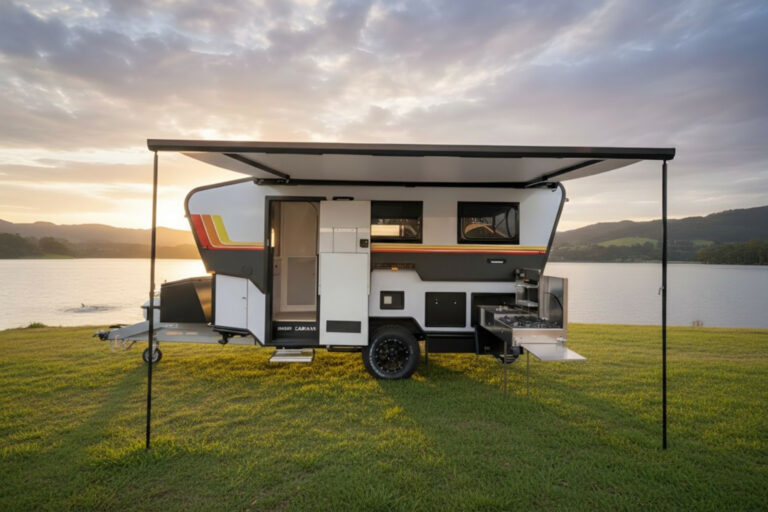
Off-grid travel has become one of the biggest draws for Australians investing in a luxury caravan, and it’s easy to understand why. National parks, remote coastlines, and quiet inland stops offer a level of freedom that powered caravan parks simply can’t match. But comfortable off-grid travel depends on more than just calling a caravan “off-grid ready” on the brochure.
This guide walks through what actually makes a luxury caravan capable of genuine off-grid travel, from power and water through to insurance and ongoing maintenance. If you’re comparing specific systems, our guides on solar power and lithium batteries go into more technical detail on the power side of things.
Power: The Foundation of Off-Grid Comfort
Power capacity determines almost everything else about how comfortably you can stay off-grid.
- Solar panel wattage needs to match your daily appliance load, not just a generic “off-grid package” label.
- Lithium battery capacity, covered in our dedicated guide on lithium batteries in luxury caravans, determines how much usable power you actually have between charges.
- Inverter size determines what appliances, including air conditioning, can realistically run without mains power.
Water: Plan for More Than You Think You Need
Water capacity is often underestimated by new off-grid travellers.
- Larger fresh water tanks extend how long you can stay in one location without needing to refill.
- Grey water tanks or portable waste solutions matter for environmentally responsible off-grid camping.
- Water filtration or purification systems add peace of mind when refilling from unfamiliar sources.
Climate Control Off-Grid
Running air conditioning or heating off-grid places significant demand on your power system.
- Rooftop reverse-cycle units generally require the most power and are best supported by a large battery bank and appropriately sized inverter.
- Our guide on caravan air conditioning explains what specifications actually matter for off-grid use.
- Insulation quality reduces how hard your climate control system needs to work, which in turn reduces power draw.
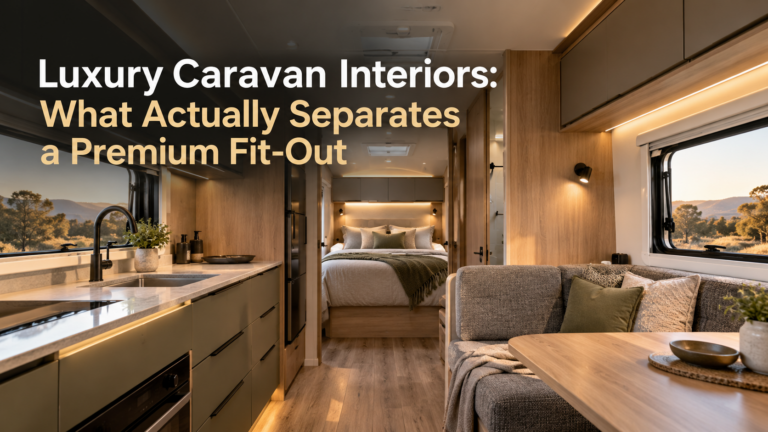
Storage and Practical Off-Grid Living
- Off-grid trips often mean carrying more supplies, tools, and recovery gear than short powered-site stays.
- Storage layout should account for weight distribution, not just available space, to avoid affecting towing balance.
- Buyers planning frequent off-grid travel should factor this into floor plan decisions, covered in our guide on luxury caravan floor plans.
Recovery and Practical Off-Grid Preparedness
- Confirm the caravan’s ground clearance and suspension are appropriate for the terrain you plan to travel.
- Carry basic recovery equipment appropriate to your travel routes, particularly for remote or unsealed roads.
- Keep a maintenance routine in place before extended trips, covered in our guide on caravan maintenance.
Insurance Considerations for Regular Off-Grid Travel
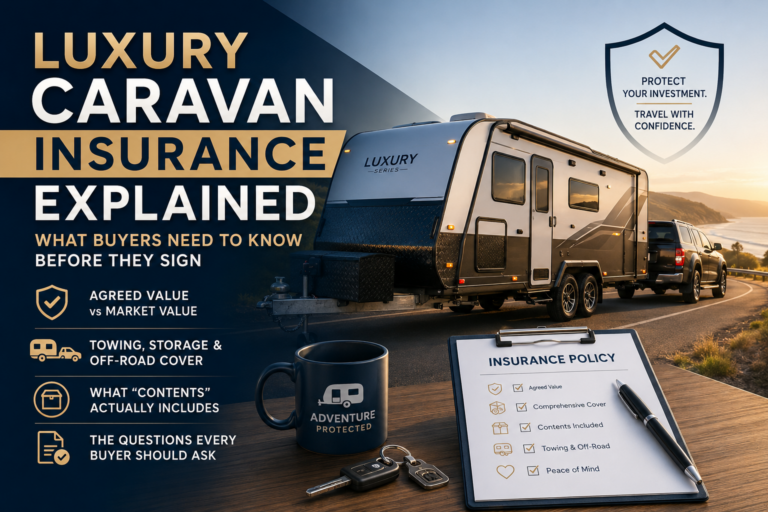
Insurance policies don’t automatically assume off-grid or remote travel, so this needs to be confirmed directly with your insurer.
- Confirm your policy covers remote and off-grid touring without additional loading or exclusions.
- Check that solar, battery, and other off-grid equipment are included in contents cover.
- Our guide on luxury caravan insurance covers exactly what to check before signing a policy suited to off-grid travel.
Questions to Ask Before Committing to Off-Grid Travel
- What is the realistic number of days the caravan can sustain off-grid before needing to recharge or refill?
- Is the solar, battery, and inverter system sized for your actual appliance load, including air conditioning if needed?
- Does your insurance policy specifically cover off-grid and remote touring?
- Is the caravan’s water and waste capacity suited to your typical trip length?
Genuine off-grid comfort in a luxury caravan comes down to how well power, water, and climate systems work together, not just whether solar panels are fitted to the roof. Getting this right means matching your setup to your actual travel style, whether that’s occasional weekend escapes or extended remote touring. With the right preparation, off-grid travel doesn’t need to mean compromising on the comfort a luxury caravan is meant to deliver.
For deeper detail on the systems that matter most, read our guides on solar power, lithium batteries, and air conditioning, or browse off-grid capable models across our dealer directory.
Frequently Asked Questions
How many days can a luxury caravan typically stay off-grid?
This varies significantly based on solar, battery, and water capacity, but well-equipped luxury caravans can often sustain a week or more of off-grid use with careful power management.
Do I need a generator if I have a large solar and battery setup?
Not always, but a generator can provide useful backup during extended cloudy periods or when running heavier appliances like air conditioning for long stretches.
Does off-grid travel affect caravan insurance?
It can, so it’s important to confirm with your insurer that remote and off-grid touring is included in your policy, particularly if you plan to travel this way regularly.
What’s the biggest mistake new off-grid travellers make?
Underestimating water and power needs is the most common issue, often because appliance load and trip length weren’t properly matched to the caravan’s actual capacity.
Is off-grid capability worth paying extra for if I mostly stay at caravan parks?
If off-grid travel is only occasional, a smaller solar and battery setup may be sufficient, and it’s worth weighing the extra cost against how often you’d genuinely use full off-grid capability.
 Off-Road Caravans
 Touring Caravans
 Family Caravans
 Lightweight Caravans
 Camper Trailers
 Luxury Motorhomes
 Caravan Pods
 Electric Caravans
 Slide-Out Caravans