Caravan interiors sell vans. Walk into a showroom and the fit-out is what you react to first, long before you look at a compliance plate. But a great deal of what reads as luxury in a photograph is surface finish, and surface finish is the part that ages fastest.
This guide covers what actually separates a premium interior from a well-styled one: how the joinery is built, which materials survive Australian conditions, what a considered layout does differently, and what the whole thing costs you in payload. It is written to help you assess an interior yourself rather than to tell you which ones look best.
What Makes a Caravan Interior Genuinely Premium?
Three things, in roughly this order of importance.
Construction quality is first, because it determines whether the interior still feels good in eight years. Caravans live a hard life: they flex on corrugations, expand and contract through big temperature swings, and absorb vibration continuously. Joinery that would be perfectly adequate in a house can fail in a van.
Material choice is second. The right material for a caravan is rarely the most expensive one. It is the one with the best balance of durability, mass and behaviour in heat and humidity.
Spatial design is third, and it is the one buyers underrate. A well-resolved layout in a smaller van will feel more liveable than a poorly resolved one in a larger van. Circulation, reach, sightlines and where two people can pass each other matter more than square metres.
Joinery and Cabinetry: Where Quality Actually Shows
Framing and Carcass Construction
Look at how the cabinets are built rather than how they are faced. Furniture-grade ply carcasses with mechanical fixings hold up better than particleboard with staples and glue. Lightweight honeycomb or composite panels are increasingly used in premium builds because they cut mass substantially without losing rigidity, though they are more expensive and harder to modify later.
Open a cupboard and look at the back and underside. Manufacturers finish the surfaces you see. What they do with the surfaces you do not see tells you far more.
Edges and Sealing
Every exposed edge is a moisture entry point. Properly applied edge banding, sealed cut-outs around sinks and hobs, and finished edges inside cupboards are the difference between joinery that lasts and joinery that swells. This is the single most reliable quality indicator available to a buyer in a showroom, and it costs nothing to check.
Hardware
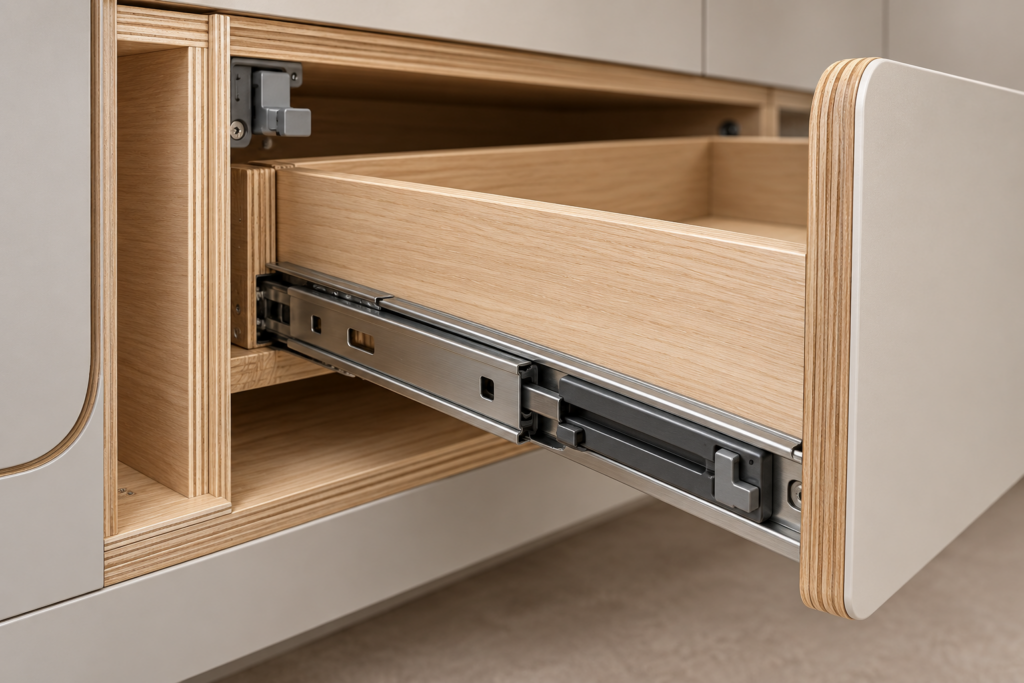
Soft-close drawer runners and positive catches are not just a comfort feature in a caravan. Drawers that open on corrugations cause damage and are genuinely dangerous. Look for runners rated for the load, catches that engage positively rather than by friction, and hinges that are adjustable. Hardware is also the component most likely to need replacement, so ask whether the parts are standard sizes you can source anywhere.
Materials That Suit Australian Conditions
| Element | What Works Well | The Trade-Off |
|---|---|---|
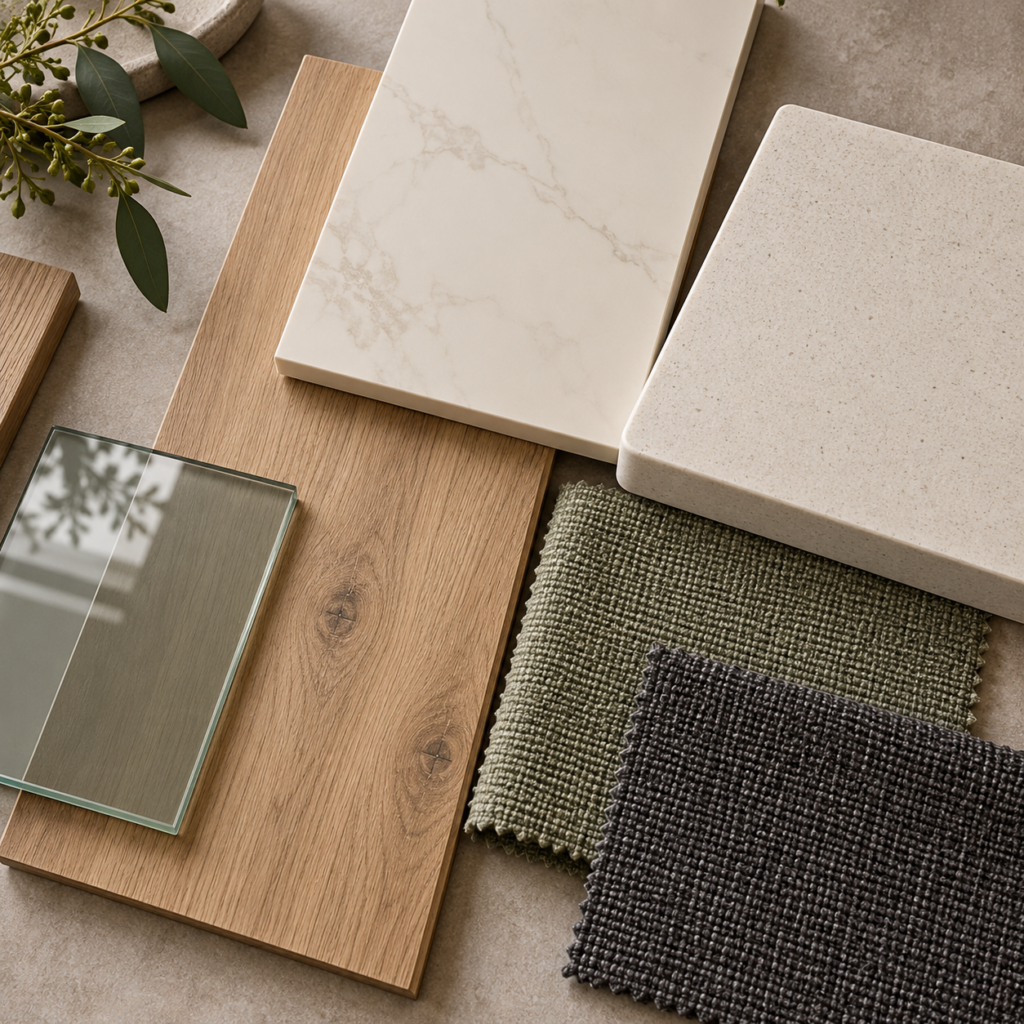
| Benchtops | Solid surface and compact laminate: light, seamless, repairable | Engineered stone looks superb and is very durable, but is heavy and can chip at edges |
| Flooring | Vinyl plank and composite: waterproof, quiet, easy to clean | Timber-look finishes can fade under direct UV through windows |
| Cabinetry facing | High-pressure laminate and quality veneer | Real timber veneer needs UV protection or it will change colour unevenly |
| Upholstery | Solution-dyed and UV-stable fabrics, quality automotive-grade vinyl | Light colours show wear quickly in a dusty environment |
| Splashbacks | Toughened glass or compact laminate | Glass adds mass and needs proper support against vibration |
| Window furnishings | Integrated blinds and flyscreens in the window unit | Fabric curtains trap dust and are harder to keep clean on gravel roads |
The Australian-specific point here is UV. A caravan interior receives far more direct sunlight than a house does, through more glass, at steeper angles, for longer. Fabrics, veneers and vinyls that perform fine indoors in cooler climates fade and become brittle here. If you travel in the tropical north, add humidity to that: anything that absorbs moisture will tell you about it within a couple of wet seasons.
The Luxury Tax Nobody Mentions: Payload
This is the part that gets left out of interior showcases, and it is the part that changes decisions.
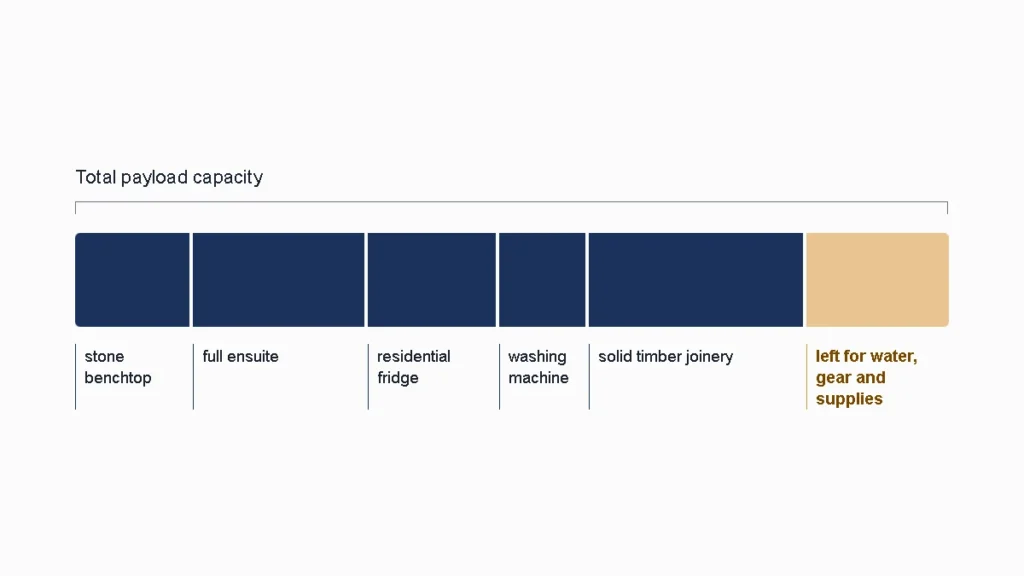
Every interior upgrade has mass. A stone benchtop, a full ensuite with a separate shower, a residential-size fridge, a washing machine, solid timber joinery and a club lounge all add kilograms that come directly out of your payload allowance. Unlike gear, you cannot leave them at home for a heavy trip.
Before you fall for a fit-out, check what it has left you to carry. Our guide to caravan weights, ATM, GTM, tare and payload explains how to work out the gap between tare and ATM, which is the number that tells you whether a beautiful interior has left you enough capacity for water, gear and the way you actually travel.
A useful way to frame it: ask what the same van weighs in its base interior specification and in the specification you are looking at. If the difference is 150 kg, that is 150 litres of water you can no longer carry.
Layout: What a Well-Resolved Interior Does Differently
Layout quality is easier to feel than to describe, but there are specific things to look for.
- Circulation. Two people should be able to pass each other in the main walkway without turning sideways, and one should be able to reach the bathroom at night without climbing over anyone.
- Bed access. In an island bed layout, check that there is genuine walking space on both sides rather than a squeeze on one.
- Reach in the kitchen. You should be able to work at the bench without the fridge door or a cupboard door blocking you.
- Bathroom door swing. A door that blocks the corridor when open is a daily irritation.
- Sightlines. Interiors feel larger when you can see through the space, so full-height dividers make a van feel smaller than the same floor area with low or partial ones.
- Where you sit. Test the lounge for an hour, not a minute, because back angle and seat depth matter more than upholstery.
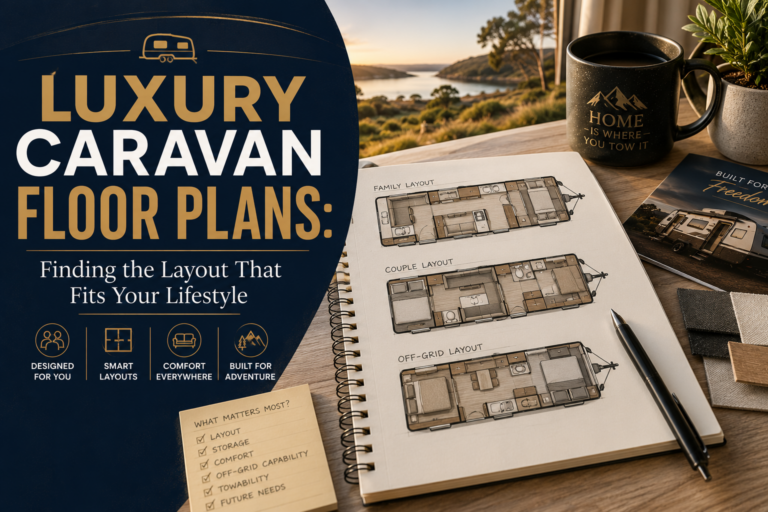
Layout constraints differ sharply by traveller type. Couples can often use space that would be unworkable for a family, which is why a smaller, well-specified build frequently outperforms a larger one. If you are weighing configurations more broadly, slide-out designs change the living-space equation in a way worth understanding before you commit to a floor plan.
Kitchens, Bathrooms and Storage
The Kitchen
The questions that matter are bench space, whether the sink and hob can be used at the same time, whether there is a usable prep area with the covers down, and whether the fridge opens without blocking the walkway. Drawer storage beats cupboard storage in a caravan because you can see and reach the back of it. Pantry access from the walkway rather than across the bench is a small detail that changes daily use.
The Bathroom
A separate shower enclosure is more comfortable than a combined wet-bathroom, but it costs floor area and mass. What matters more than the configuration is sealing: check the shower base junction, the wall panel joints and how the extraction is handled. Poor extraction in a caravan bathroom creates moisture problems everywhere else in the van.
Storage That Actually Works
Volume is not the useful measure. Access is. Look for storage that is reachable without unpacking something else first, external hatches for the items you use outdoors, and heavy storage positioned low and near the axles rather than high or at the extremities, which affects towing stability as well as mass distribution.
Lighting, Climate and Acoustic Comfort
Layered lighting is the difference between an interior that feels residential and one that feels like a vehicle. Look for separate task, ambient and reading circuits rather than a single bank of downlights, dimmable output, and warm colour temperature. Test it at night if you can, because showroom lighting hides everything.
Thermal and acoustic comfort are interior qualities even though they are built into the shell. Insulation quality, double glazing and how well the van seals determine whether the interior is usable in an Australian summer without running air conditioning constantly. Ask what the insulation specification is and whether the windows are double glazed, and treat the answer as part of the interior assessment rather than a separate technical question.
Is a Premium Interior Worth the Money?
There is a real trade-off here and it is worth setting out honestly rather than assuming the answer is yes.
The Case for Spending More
- Construction quality and hardware are the components that determine whether the interior still functions well in eight to ten years. These are expensive to fix later and effectively impossible to retrofit.
- You live in the space. If you travel for extended periods, daily comfort compounds in a way that specification sheets do not capture.
- Better sealing, insulation and glazing reduce running costs and make more of the year usable.
- Fit-out quality is visible to buyers and tends to be reflected in what the van is worth at resale.
The Case Against
- Heavy finishes consume payload permanently, which can push you into a larger tow vehicle and cost far more than the upgrade itself.
- Some premium finishes are cosmetic and do not improve durability. Stone and timber are the usual examples.
- Highly customised interiors can narrow the resale market rather than widen it.
- Complex fitted appliances add failure points and service requirements in remote areas.
The Alternatives Worth Considering
- Spend on construction and hardware, save on visible finishes. This is the option most experienced buyers take.
- Choose a lighter interior specification and put the payload into water and battery capacity instead.
- Buy a well-built base specification and upgrade soft furnishings later, which is cheap, reversible and does not affect tare.
- Look at what is achievable through a custom build or refit if no production interior fits how you travel.
How to Assess an Interior in Fifteen Minutes
Do these in order. Most of them cost nothing and none require the salesperson’s help.
- Open every cupboard and drawer. Look at the unfinished surfaces: backs, undersides, inside edges. This tells you more than anything else in the van.
- Run a finger along exposed edges and around sink and hob cut-outs. Check for sealing and edge banding.
- Load a drawer and open it fully. Check the runner has no play at full extension.
- Stand in the walkway and have someone pass you. Then open the bathroom door and the fridge.
- Sit on the lounge properly, feet on the floor, for several minutes.
- Look at the shower base junction and the wall panel joints.
- Ask what the same model weighs in base interior specification versus this one.
- Ask what the insulation specification is and whether the glazing is double.
- Ask which hardware components are standard sizes you can source yourself.
- Photograph the compliance plate before you leave.
Frequently Asked Questions
What Makes a Caravan Interior Luxury Rather Than Just Well Presented?
Construction and materials rather than styling. Furniture-grade joinery, sealed edges, load-rated hardware, UV-stable fabrics and considered lighting are what separate a premium interior. Surface finishes photograph well but are the first thing to age.
Do Heavier Interior Finishes Affect What I Can Carry?
Yes, directly. Stone benchtops, full ensuites, residential appliances and solid timber joinery all add to the van’s tare mass, which reduces payload by exactly the same amount. Unlike gear, you cannot unload them for a heavy trip.
What Interior Materials Hold Up Best in Australian Conditions?
Solution-dyed and UV-stable fabrics, compact laminate and solid surface benchtops, vinyl plank or composite flooring, and high-pressure laminate cabinet facings. UV through caravan windows is more punishing than most buyers expect, and humidity in the tropical north is hard on anything that absorbs moisture.
Is Engineered Stone a Good Choice for a Caravan Benchtop?
It is durable and looks excellent, but it is heavy and can chip at exposed edges under vibration. Compact laminate and solid surface materials give most of the practical performance at a fraction of the mass. If you want stone, budget the payload for it deliberately.
How Do I Tell if Caravan Joinery Is Well Built Without Taking It Apart?
Look at the surfaces the manufacturer did not expect you to see. Open cupboards and check the backs, undersides and internal edges for finishing and sealing. Load a drawer and extend it fully to check the runner. Unfinished interior surfaces are the clearest signal available to a buyer.
Does a Premium Interior Hold Its Value?
Build quality generally does, because it remains visible and functional years later. Highly personalised finishes are less reliable, because they narrow the pool of buyers. A well-built neutral interior tends to resell better than a heavily customised one.
Should I Buy a Better Interior or a Lighter One?
It depends on how you travel. Extended touring and off-grid travel reward payload capacity, so a lighter interior specification with the mass spent on water and batteries usually serves better. Shorter trips with powered sites reward comfort. Work out your payload first, then decide.
Before You Shortlist
Interiors are the easiest part of a caravan to fall for and the hardest part to assess from photographs. Use the fifteen-minute check above on every van you look at, and ask the same questions each time so you are comparing like with like.
Two things are specific to buying here. First, Australian conditions are harder on interiors than the marketing generally acknowledges, and UV, dust and humidity affect materials differently depending on where and when you travel. Second, manufacturing practice varies considerably between builders, so specification questions are best answered by the people who build the van rather than inferred from a brochure.
You can browse premium caravan manufacturers and dealers and contact them directly to ask about joinery construction, interior specification options and what each option adds to tare mass before you visit a showroom. If you are earlier in the process, our guide to how to choose a luxury caravan and the cost breakdown for Australian luxury caravans cover the decisions that sit around this one.
 Off-Road Caravans
 Touring Caravans
 Family Caravans
 Lightweight Caravans
 Camper Trailers
 Luxury Motorhomes
 Caravan Pods
 Electric Caravans
 Slide-Out Caravans