Before buying a caravan in Australia, confirm that your tow vehicle can handle its loaded weight, inspect the caravan’s structure and systems, verify its history, review the purchase contract and insurance, and plan for ongoing ownership costs. For used caravans, arrange an independent inspection and an appropriate PPSR search. For new caravans, confirm the exact specification, delivery terms and warranty arrangements.
A beautiful interior can make a luxury caravan feel like the right choice within minutes. But the best caravan is one that suits your travels, can be towed legally, performs reliably and comes with clear paperwork.
1. Start With Your Travel Style, Not the Showroom.
Are you planning weekend stays at powered parks, family holidays or extended off-grid trips? Write down who will travel, where you expect to go, and the equipment you will use most often. Consider permanent beds, workspace, kitchen storage, bathroom access and whether unsealed roads are part of your plans.
A large solar array and extra water tanks may be valuable for remote touring but unnecessary for someone who stays at serviced sites.
2. Confirm Your Towing Limits and Loaded Weights.
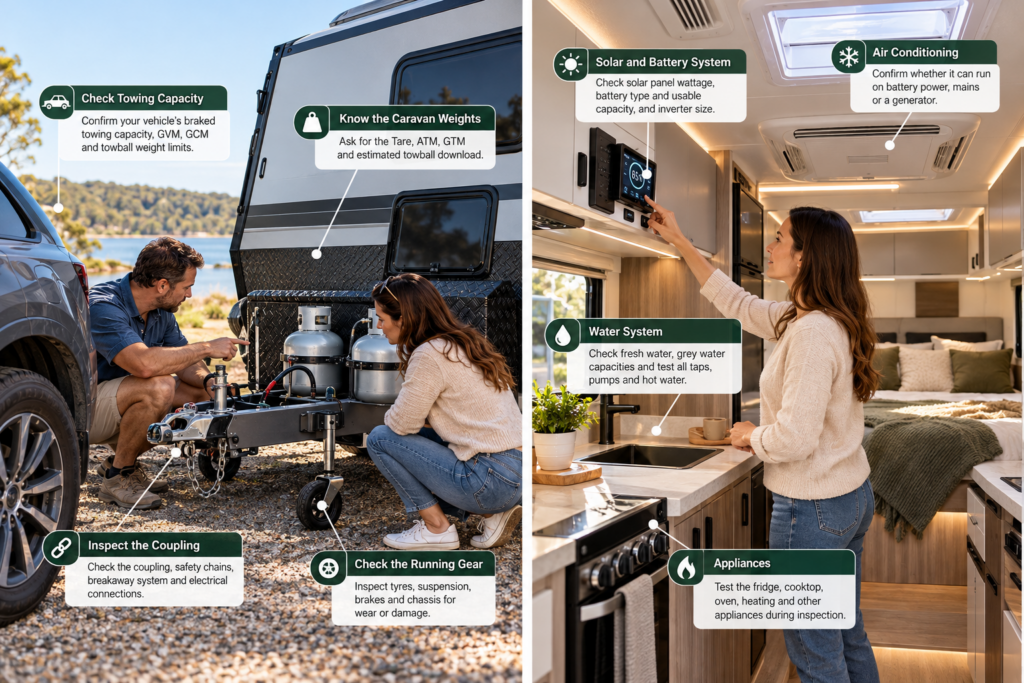
Ask for the caravan’s Tare Mass, Aggregate Trailer Mass (ATM), Gross Trailer Mass (GTM) and estimated towball download. Then check your tow vehicle’s braked towing limit, Gross Vehicle Mass (GVM), Gross Combination Mass (GCM), axle limits and towbar rating.
A vehicle’s advertised towing capacity alone does not prove that the fully loaded combination is legal. Water, gas, passengers, luggage and aftermarket equipment all matter. Towball download also contributes to the vehicle’s load. Get a realistic loaded-weight calculation and, where practical, weigh the vehicle and caravan rather than relying on an empty showroom figure. RAC WA’s caravan towing weight guide explains the terms.
3. Decide Whether New or Used Is Right for You.
A new luxury caravan can offer contemporary equipment, layout choices and a known ownership history. A used model may provide more space or accessories within the same budget, but its maintenance and condition need closer scrutiny.
| Buying Consideration | New Caravan | Used Caravan |
| Main Benefit | Choice of specifications and options. | Potentially more equipment for the budget. |
| Main Uncertainty | Build time, exclusions and delivery. | Wear, water ingress and repair history. |
| Most Useful Check | Written order and final inclusions. | Independent inspection and records. |
Compare the total cost to make the caravan road-ready, not just its advertised price.
4. Test the Layout as Though You’re Travelling.
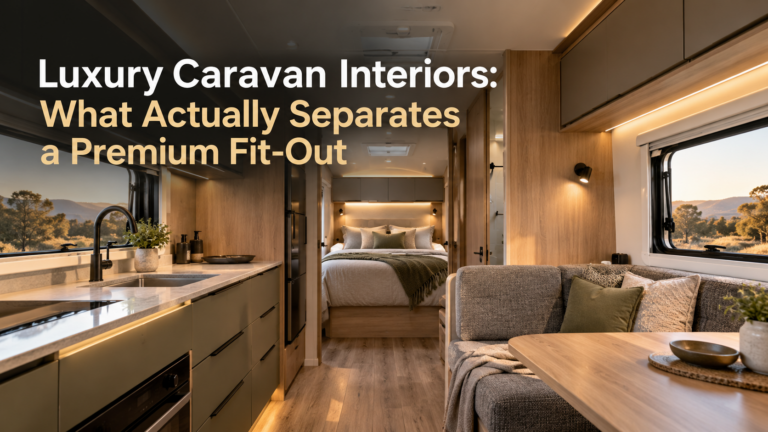
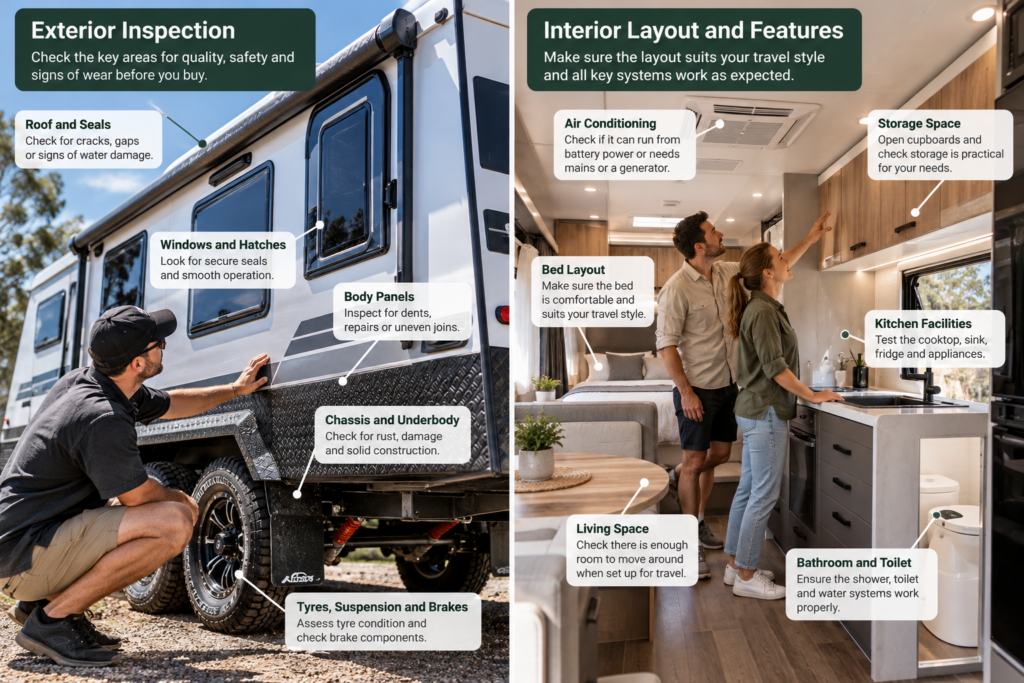
Stand in the bathroom, open every cupboard and imagine the caravan with people and luggage inside. Can someone cook while another person moves through the space? Is there enough room beside the bed? Can children reach their bunks safely, and is there practical storage for wet shoes and outdoor equipment?
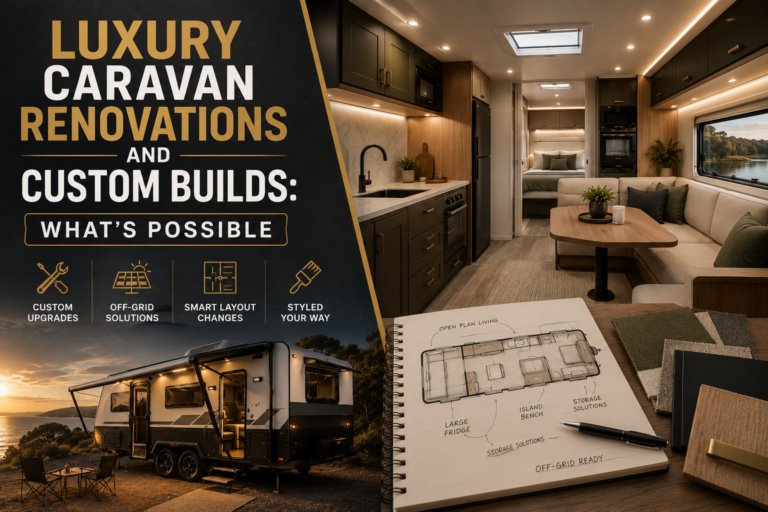
Island beds, ensuites and slide-outs can improve comfort, but they also affect usable floor space, weight and maintenance. Our luxury caravan floor-plan guide looks at these trade-offs in more detail.
5. Inspect Build Quality and Signs of Water Damage.
Examine the roof joins, windows, hatches, door seals, wall corners and plumbing penetrations. Look for staining, bubbling, soft flooring, swelling around cabinetry and musty smells. Ask about construction materials and insulation, but assess workmanship rather than assuming one material is always superior.
Underneath, check visible chassis components, suspension, brake equipment, tyres and corrosion. An experienced independent caravan inspector can identify faults that are difficult to judge in a showroom. This is especially important when buying a used caravan or one that has travelled extensively on rough roads.
6. Check the Identity and History of a Used Caravan.
Match the Vehicle Identification Number (VIN) or other applicable identifier against the paperwork. Request maintenance records and details of repairs, alterations, accidents or previous leaks. Confirm ownership and state registration requirements.
For a second-hand caravan, consider a search through the Australian Government’s Personal Property Securities Register. A vehicle search can reveal registered security interests and available stolen or written-off information. Search close to the purchase date. A clear result does not guarantee mechanical condition, so it should complement—not replace—an inspection.
7. Assess Solar, Batteries, Water and Off-Grid Capability.
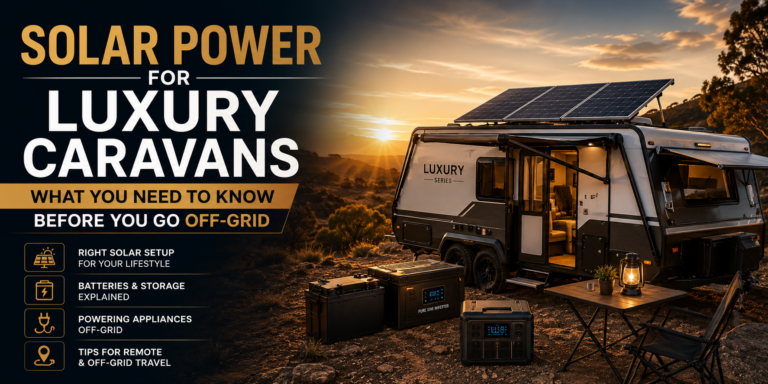
Ask for the solar wattage, battery chemistry and usable capacity, inverter output, charging equipment and fresh- and grey-water capacities. Find out which appliances run on batteries and which need 240V power or a generator. Request a demonstration rather than relying on a brochure’s phrase “off-grid ready”.
For example, having a powerful inverter does not automatically mean you can run air conditioning overnight. Battery capacity, appliance demand and recharging conditions determine real performance. Our off-grid luxury caravan guide explains how the systems work together.
8. Verify Safety Equipment and Servicing Access.
Check the coupling, safety chains, lights, brakes, tyres, breakaway equipment where required and the accessibility of gas and electrical isolation points. Ask which compliance documentation applies to the caravan and the state or territory where you will register it. Make sure you can reach the water pump, fuses, battery switches and service points. A feature-rich caravan can be frustrating to own if routine maintenance requires removing furniture.
9. Understand Warranties and Australian Consumer Rights.
Request written details of structural and appliance warranties, servicing requirements, exclusions and the process for obtaining repairs away from the selling dealer. Find out who coordinates claims when a component is supplied by another manufacturer.
A manufacturer’s warranty is separate from applicable Australian Consumer Law guarantees. For eligible purchases from businesses, consumer guarantees can apply even after an express warranty expires. The appropriate remedy depends on the circumstances. Private-sales protections can differ, so check your position rather than assuming that every used purchase carries the same rights. Read the ACCC’s caravan consumer guidance.
10. Organise Caravan Insurance Before Collection.
Before choosing caravan insurance, compare more than the premium. Ask whether the policy uses agreed or market value, what excesses apply, and whether it covers the places you intend to travel or store the van. Check towing-related incidents, storm damage, theft, temporary accommodation, roadside assistance and any relevant limitations.
Also confirm whether permanently fitted solar panels, lithium batteries, awnings, annexes and personal belongings are covered, and under which section of the policy. Accessories and contents are not necessarily treated the same way. Get key answers in writing and arrange suitable cover before taking possession.
11. Budget for Ownership and Review the Contract.
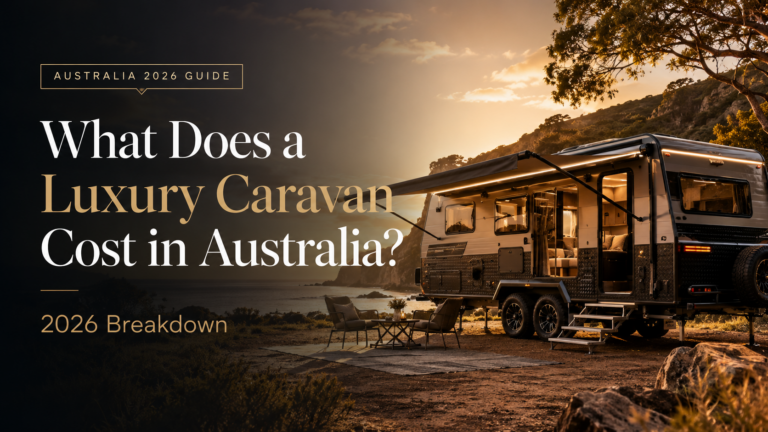
Include registration, transfer charges, insurance, servicing, storage, tyres, towbar or brake-controller work and likely upgrades. Factor in fuel consumption and possible repairs, particularly with older models. Our Australian luxury caravan cost guide provides a useful starting point.
Before paying a deposit, check that the contract specifies the exact caravan, options, final price, payment milestones, delivery arrangements, cancellation terms and any agreed repairs. Ask for verbal promises to be written down.
12. Complete a Pre-Delivery Inspection.
Inspect the actual caravan you will collect, not just a display model. Test lights, fridge, cooktop, taps, shower, toilet, doors, windows, heating or cooling and the electrical monitoring system. Confirm that included accessories are present and the caravan matches the written order.
Ask for a demonstration of safe hitching and key shutdown procedures. Photograph defects, record agreed fixes and collect manuals, keys, compliance documents, registration paperwork and warranty details.
Final Caravan Pre-Purchase Checklist.
- My travel style and essential features are clear.
- Towing limits, towball load and loaded weights have been checked.
- New-versus-used costs and inclusions have been compared.
- The layout works for everyone travelling.
- Construction, seals, chassis and tyres have been inspected.
- VIN, history and PPSR checks are complete where relevant.
- Power, water, gas and safety equipment are understood.
- Warranty, consumer rights and dealer support are clear.
- Insurance and ongoing ownership costs have been reviewed.
- Contract terms and pre-delivery checks are documented.
The right caravan should be comfortable and suitable for your vehicle, travel style and budget. Use this checklist before the deposit and again at handover, and keep written evidence of the important answers. For the next stage of your research, explore Australian caravan dealers through Luxury Caravans and compare models at your own pace.
Frequently Asked Questions
What Should I Check When Buying a Caravan in Australia?
Start with loaded towing compatibility, the caravan’s physical condition, layout and systems. Then verify history and registration details, compare ownership costs, review warranty and consumer rights, organise insurance and inspect the caravan before accepting delivery. Used caravans particularly benefit from independent inspections.
What Is Most Commonly Overlooked When Buying a Caravan?
The interaction between towing limits is easy to underestimate. Even if the caravan sits below the vehicle’s advertised towing limit, towball load, axle ratings, vehicle payload and GCM may restrict what you can legally carry.
Before Choosing Caravan Insurance, What Final Details Should I Check?
Confirm the sum insured, agreed-versus-market-value terms, excesses, permitted uses and destinations, storage conditions and how fitted accessories are covered. Check exclusions and claims procedures, and obtain clarification directly from the insurer before purchase or renewal.
Should I Buy a New or Used Luxury Caravan?
Choose based on condition, towing suitability, features, budget and support rather than age alone. New caravans may offer customisation, while used caravans can offer value. An independent inspection and documented history are particularly useful for a used purchase.
Do I Need a Caravan Inspection Before Buying?
A detailed inspection is recommended for every caravan, with independent specialist checks particularly valuable for second-hand models. Pay close attention to water ingress, chassis condition, brakes, tyres, wiring and evidence of past repairs.
 Off-Road Caravans
 Touring Caravans
 Family Caravans
 Lightweight Caravans
 Camper Trailers
 Luxury Motorhomes
 Caravan Pods
 Electric Caravans
 Slide-Out Caravans